Quality and sourcing
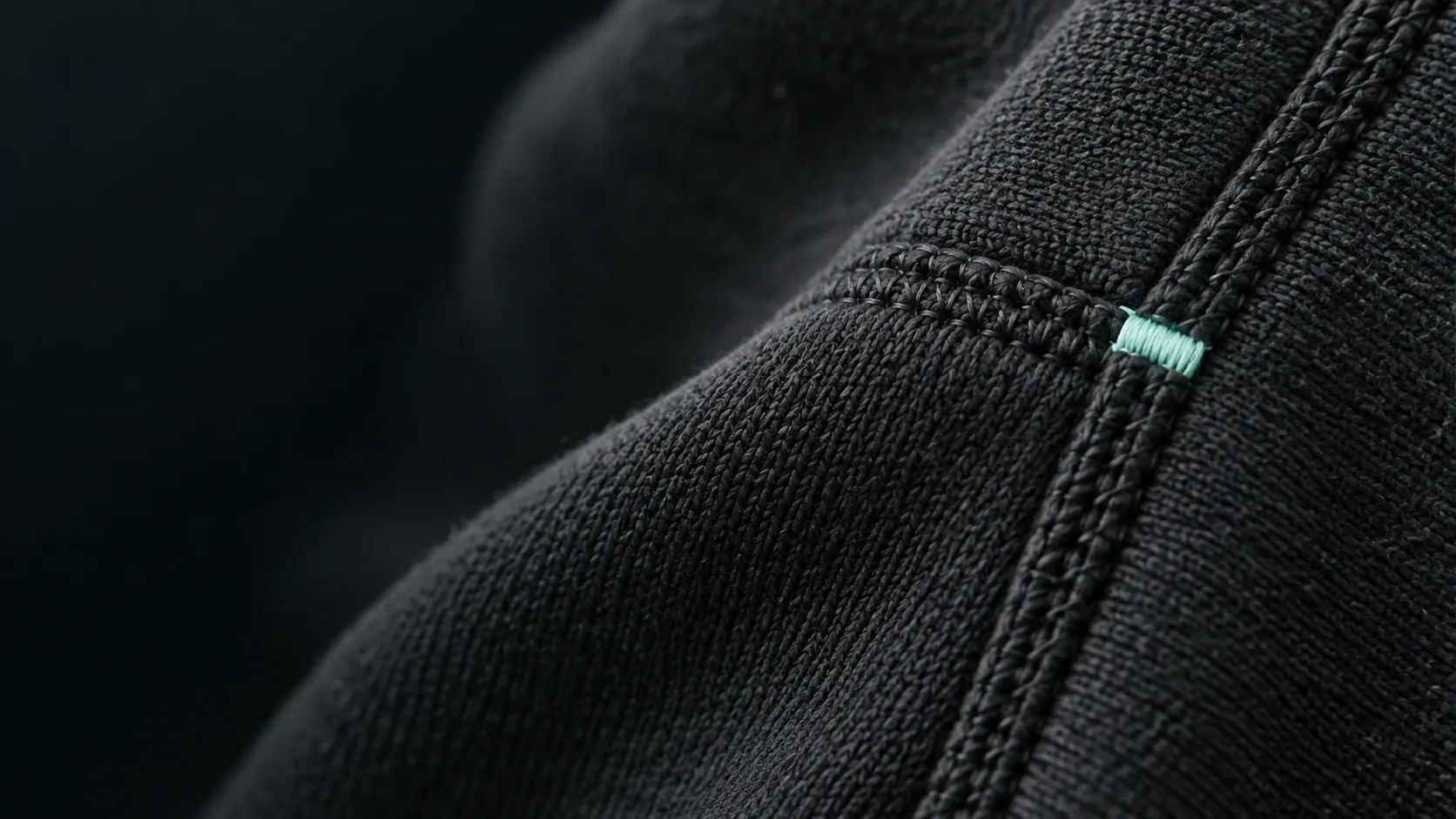
The details make the difference.
We scale through a partner network rather than owning factories, which means the quality standard has to live with us rather than with whoever happens to be producing. Quality control and authentication are the two things we never delegate.
Why we do not own factories
A capital-heavy factory has to keep its machines running. That distorts every recommendation it makes: the answer to what you should produce becomes whatever that plant is set up to produce. We would rather be able to tell you that your idea suits a different method entirely.
So the model is a hybrid. We own product strategy, creative direction, tech packs and art prep, drop management, fan-data strategy, quality control, client service and dKR authentication. Light production sits in-house where turnaround matters more than unit cost. Bulk production scales through partners selected per job.
Suppliers are non-exclusive and product records are factory-neutral. That is a commercial protection for you as much as an operational one: a supplier problem becomes a routing decision, and your product data is never held inside someone else's system.
What sits where
In-house, light production, and partner network.
Owned in-house
Product strategy, creative direction, tech packs and art prep, drop management, fan-data strategy, quality control, client service and dKR authentication.
Printed in-house
DTG, DTF, UV DTF, embroidery, UV direct-to-object and wide-format printing on our own machines, plus sampling, labels and hangtags, VIP box assembly, event prep and packaging systems.
Scaled with partners
Bulk screen print, cut-and-sew, headwear, dye and wash, sublimation, retail compliance, high-volume fulfilment and specialty goods.
In-house equipment
The machines we print on.
Eight machines across apparel, print and promo, chosen for colour range, resolution and the finishes a four-colour shop cannot offer.
DTG — Brother GTX600 Extra Colors
Prints straight onto the garment with six industrial heads, adding orange and green to CMYK for colour a four-colour printer cannot reach. Water-based inks, OEKO-TEX ECO PASSPORT and GOTS certified.
Up to 1200 × 1200 dpi · 24 × 24 in print area
DTF — Mimaki TxF330-800
Transfers in six colours plus white, with sky blue and pale pink for brighter blues and pinks, on film wide enough to gang a full run of large prints. OEKO-TEX ECO PASSPORT certified inks.
Up to 1200 dpi · 800 mm print width
UV DTF — Mimaki UJV300DTF-75
UV-cured transfers in CMYK with white and clear, laminated to an application sheet on the machine, then rubbed onto cups, bottles, helmets and other hard or curved surfaces with no heat press.
640 mm print width · CMYK, white and clear
Embroidery — two Melco SUMMIT
Two 16-needle machines, so a run splits across both or two jobs stitch at once. Automatic thread tension keeps every stitch even without a hand on the dial, a laser marks exactly where the design will land before the first stitch, and a wide-angle frame embroiders caps as well as flat garments.
Up to 1,500 stitches/min · 16.1 × 15.5 in field · 14.1 × 3.25 in cap frame
UV direct-to-object — Roland VersaOBJECT CO-300i-F2
Prints directly onto objects up to 9.5 inches tall, flat, curved or irregular, with white, gloss and primer layers for raised and textured finishes. With Roland's Rotary Rack XL it prints all the way round cylinders — bats, bottles, tumblers, even tapered glassware — which few shops can offer.
Up to 1400 dpi · 749 mm print width · full wrap 0.5–7.75 in diameter
Wide format — Mimaki UJ330H-160
One machine for roll and rigid work: posters, banners, window graphics and wraps up to 64 inches wide, and rigid boards up to 4 × 11 ft, with clear-ink gloss, matte and embossed effects.
Up to 1800 dpi · 64 in roll · 4 × 11 ft rigid
Cutting — Mimaki CG-160FXII Plus
Contour-cuts stickers, decals and heat-transfer vinyl to the printed edge, reading the register marks printed with each job so the cut lands where the ink did. Matched to the UJ330H-160, so anything that prints wide can be cut wide.
1,600 mm cutting width · 140 cm/s
Mimaki, Roland, Brother and Melco.




4 makers · 8 machines · embroidery, DTG, DTF, UV DTF and UV wide format, in-house
Production footprint
Where the work is actually done.
Not owning factories is a sourcing position, not an absence of a shop. This is what sits under our own roof, what we buy blanks from, and what we can print that is not a garment.
Los Angeles and Huntington Beach, California
Decoration and finishing
Direct-to-garment printing is on our own machines, so a first physical version does not wait in another shop’s queue and a correction is a re-press rather than a re-quote.
- DTG, on in-house printers
- DTF, including gang sheets
- UV DTF transfers for cups, bottles and other hard goods
- Embroidery
- Private label, garment labels and hangtags
- Cut and sew
- VIP box assembly and packaging
Sourced across 20+ blank partnerships
Blanks and headwear
A programme is specified against the blank that suits it rather than the one shelf we happen to hold, which is the practical form of not owning a factory.
- Garment sourcing
- Hat sourcing
- Specification against the blank, not around it
Partners namedNew EraMitchell & NessShakaIndependent
64-inch UV wide-format, roll and rigid board
Print beyond the garment
The things around a drop — the booth, the wall, the sticker pack — are produced inside the same brand system rather than handed to a fourth vendor with a different colour reference.
- Stickers and decals, contour-cut to the print
- Posters and wall art
- Boards up to 4 × 11 ft
- Large vinyl: banners, window graphics and wraps
- Full-wrap printing on bats, bottles and tumblers, 0.5–7.75 in diameter
- Skateboards
- Trade-show booth panels
These are the capabilities available here. Bulk screen print, cut-and-sew at volume, dye and wash, sublimation and high-volume fulfilment are routed to partners per programme, and the region for those is part of the sourcing recommendation rather than fixed — it changes lead time and landed cost enough that it belongs in the economics rather than in a claim on a web page.
Supplier standards
What a supplier has to satisfy to get work.
Applied at onboarding and reviewed per programme. A supplier who cannot evidence these does not receive an authorised specification.
Demonstrated capability
Proven output in the specific method and category, evidenced by sample rather than by claim.
Structured quotation
Quotes returned against a defined specification, quantity and date, in a comparable structure rather than as a lump sum.
Data requirements
Milestone reporting, QA evidence and exception notification in a form that reaches our records rather than an inbox.
Insurance and compliance
Current cover, and the compliance documentation the category and destination market require.
Scoped access
A supplier sees only the current project data they need. Superseded files are withdrawn rather than left available.
Contingency
No single supplier is the only route to a category. Non-exclusive relationships and neutral records make rerouting possible.
Quality control
What happens before goods ship.
Indicative sequence for a standard apparel or headwear programme. Specific test requirements are set per programme and per destination market.
- 01
Specification review
Typically Before any supplier engagement
The tech pack is checked for internal consistency and manufacturability before it reaches a supplier. Resolution, bleed, unsupported methods and unsafe placement are caught here.
- dropKULTXR owns
- Technical review and preflight
- You own
- Final artwork approval
- Produces
- An authorised specification at a fixed version
- 02
Sample production and review
Typically 7 to 14 days including shipping
A physical sample is produced against the authorised spec and reviewed for construction, decoration quality, colour, fit and finish. This becomes the reference standard for the run.
- dropKULTXR owns
- Sample management and technical assessment
- You own
- Approving the physical sample
- Produces
- An approved reference sample
GateNo production run proceeds without an approved physical sample.
- 03
In-production checks
Typically Throughout production
First-off inspection at the start of the run, then in-process checks against the approved sample. Catching a decoration drift at unit 50 is a correction; catching it at unit 2,000 is a write-off.
- dropKULTXR owns
- Inspection criteria and exception escalation
- You own
- Availability for exception decisions
- Produces
- Inspection evidence bound to the run
- 04
Final inspection and reconciliation
Typically Before release to fulfilment
Finished goods are inspected against the approved sample, quantities are reconciled against the purchase order, and defects are dispositioned rather than shipped and apologised for.
- dropKULTXR owns
- Final inspection, disposition and reconciliation
- You own
- Sign-off on any disposition that affects the drop
- Produces
- Release-ready inventory with QA evidence
GateGoods that fail inspection are held. A held run gets an owner, a cause and a recovery date, not a quiet substitution.
- 05
dKR activation
Typically At QA release
Authentication identifiers are activated only once QA has reconciled them against approved goods. Before that point they exist but authenticate nothing.
- dropKULTXR owns
- Issuance, custody, reconciliation and activation
- You own
- Nothing — this is entirely ours
- Produces
- Verifiable product bound to an approved record
GateEvidence-bound. An identifier is never activated on the assumption that the goods are correct.
Authentication
Where dKR enters production.
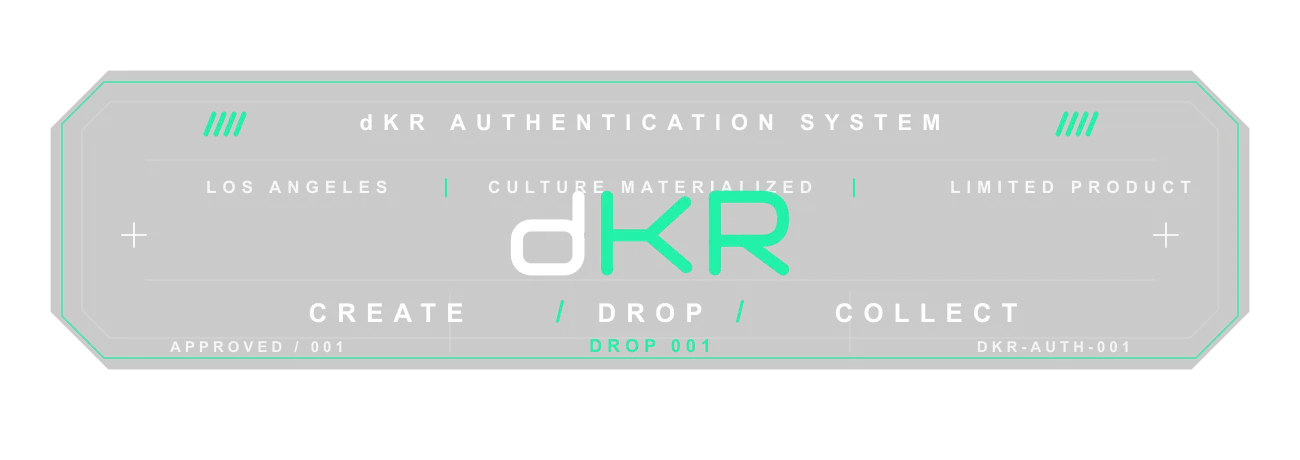
dKR is applied during production and activated at QA, not printed and hoped for. That ordering is the whole point: an identifier that activates before anyone has checked the goods authenticates nothing.
- Issued per approved product
- A batch is created only against an approved product record and a planned quantity, never speculatively.
- Custody is recorded
- Print quantity, waste and custody of labels and tags are tracked. Unaccounted stock is a fraud vector.
- Activated at QA
- Reconciled against approved goods before activation. No evidence, no verification.
- Revocable
- Fraud, recall, rights or production issues invalidate an identifier or a batch, with an evidence trail.
Questions we get asked
What counts as a defect?
Measured against the approved sample, not against an abstract ideal. Decoration misregistration, placement outside tolerance, construction faults, colour outside the agreed range and finishing failures are defects. Some variation is inherent rather than defective — garment dye produces shade variation between units by design, and we will tell you that before you approve the method rather than after a customer complains.
What happens if a run fails inspection?
It is held, and you get told what happened, what it affects, what we are doing and a recovery date. Depending on the cause that means rework, partial release, reproduction or a supplier change. What does not happen is a quiet substitution or a shipment with a hopeful note attached.
Can we specify our own tests?
Yes. Required tests are part of the authorised specification a supplier quotes against, so they are priced and scheduled rather than added as an afterthought. If you have retail compliance requirements, bring them at brief stage.
Do you audit factories?
Suppliers are assessed at onboarding and reviewed per programme against the standards above, with capability evidenced by sample. We are being deliberately careful with our language here: we are not going to describe an audit programme in more absolute terms than we can currently evidence. If your procurement process needs specific documentation, ask and we will tell you exactly what we hold.
Where is production based?
Decoration and finishing run through Los Angeles and Huntington Beach, California — embroidery, DTG, DTF, UV DTF and UV wide-format printing on our own machines (stickers, posters, boards and large vinyl), plus private label, labels and hangtags, cut and sew, and box and packaging assembly. Blanks and headwear come from more than twenty partnerships, New Era, Mitchell & Ness, Shaka and Independent among them. Bulk print at volume, dye and wash, sublimation and high-volume fulfilment are routed per programme, and that region is part of the sourcing recommendation rather than fixed, because it moves lead time and landed cost enough to belong in the economics you approve. If a programme has to be made in the United States, say so at brief stage and we will tell you straight away whether the quantity and the method allow it.
How quality is actually assured
What inspection covers, and what the law requires on the garment itself.
Quality control
Inspection is sampling, not counting. Knowing how the sampling works tells you what a pass actually guarantees — and what it does not.
Labelling and compliance
Labelling is not branding. It is a legal requirement that differs by market, and the obligation usually sits with whoever sells the garment — which is you.
Ask us the hard questions early.
Bring your compliance requirements and your quality standard at brief stage. It is much cheaper than discovering them at inspection.