dKR
The story stays with the product.
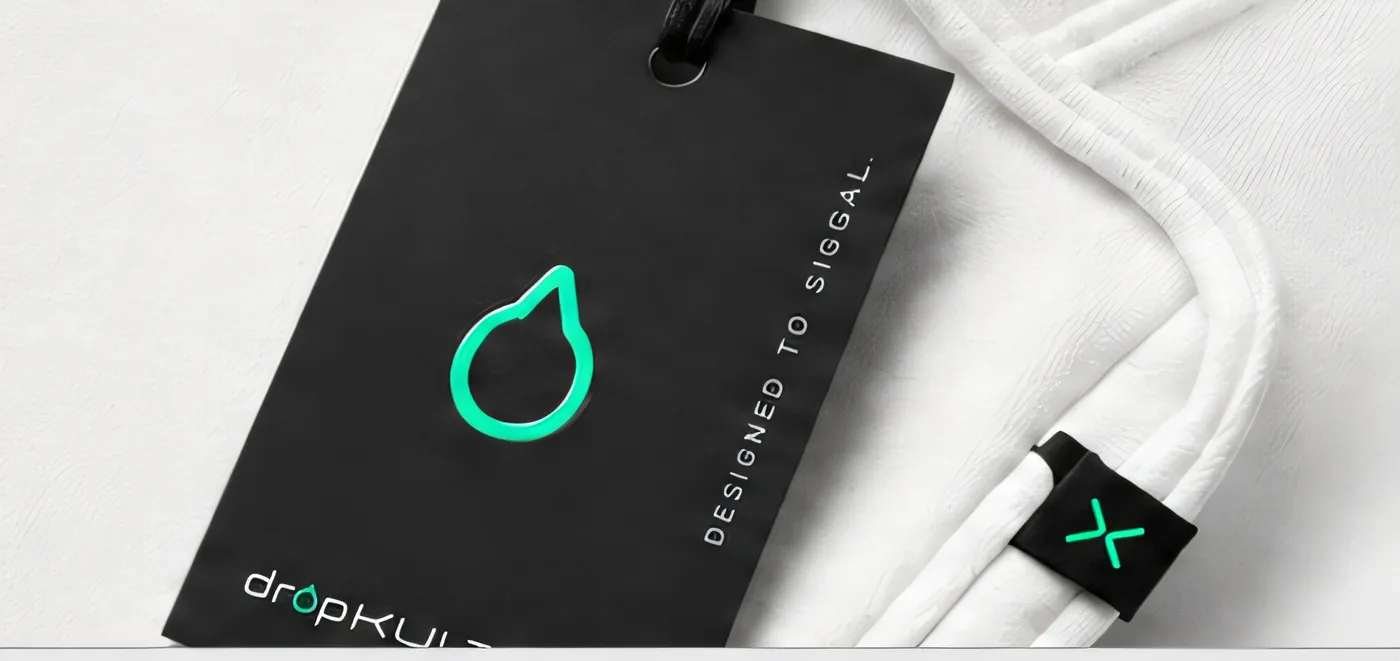
dKR appears on neck labels, sleeve hits, hangtags and packaging seals. It exists to bind a physical item to an approved production record, so a limited edition can actually be shown to be one rather than just described as one.
Check an item
Verification is live
If you are holding a product with a dKR mark on it, you can check it now. Enter the code from the neck label, hangtag or packaging seal and you will get an explicit answer: verified, no record, not a readable code, or a fault on our side that we own rather than blame on the item.
No account, no email address, and nothing about you is recorded. Anonymous verification is the point rather than a concession — checking whether something is genuine is not a reason to ask anybody for a relationship.
Claiming an item, and the full product passport behind a verified code, are still being built. What is live today is the authenticity answer itself, and that is the part somebody holding a garment actually needs.
Check a code now.
From the neck label, hangtag or packaging seal.
What it means
What the mark asserts.
Deliberately specific, because an authentication mark that overclaims is worse than no mark at all.
This item came from an approved production run
The identifier is bound to a specific product record, a specific approved version and a specific production lot — not to a general assurance that the brand is real.
QA confirmed it before it shipped
An identifier is activated only after quality control has reconciled it against approved goods. Until then it exists but authenticates nothing.
The product record travels with it
Materials, construction, care, edition or batch, story and rights attribution are attached to the item rather than to a receipt you will lose.
It can be revoked
Fraud, recall, a rights problem or a production issue invalidates an identifier or a whole batch, with an evidence trail behind the decision.
What it does not mean
What we will not claim.
Worth stating outright. Several of these are things authentication systems routinely imply and cannot support.
It is not a valuation
dKR says an item is what it says it is. It makes no statement about what the item is worth now or later, and we will not imply a resale market that we do not operate.
It is not a guarantee against counterfeiting
No mark makes counterfeiting impossible. dKR makes a counterfeit detectable and reportable, which is a different and more honest claim.
It is not an ownership registry by default
Verification is anonymous. An item is not linked to a person unless that person chooses to claim it and gives specific permission.
It is not a warranty
Authentication is separate from any warranty or returns entitlement, which are covered by the terms of the purchase.
Where you will find it
How the mark is applied.
Neck labels
Woven or printed into the garment itself, carrying the mark and the item's identifier.
Sleeve hits
A visible mark on the garment where the programme calls for the authentication to be part of the design.
Hangtags
The primary carrier on most products, with the mark, the identifier and the verification route.
Packaging seals
On boxed and kitted product, where the seal being intact is itself part of the evidence.
Limited-edition archive
On collector programmes, marking a specific numbered item within a defined edition.
Product passport page
The digital record behind the physical mark.
Being built. Not live yet.
Privacy, deliberately
Anonymous verification will always work. Checking whether an item is genuine is not a reason to require an account, and building it that way would turn an authenticity tool into a data collection exercise.
Claiming an item — linking it to you for rewards, early access or ownership records — is optional, explained before you are asked, and requires specific permission for the specific purpose. Consent to claim a product is not consent to marketing, and the two are asked separately.
The identifier itself carries no personal data and no supplier confidential information. It is an opaque token, so scanning it exposes nothing about you or about the production chain behind it.
We do not describe our anti-counterfeiting logic in public. That is not evasiveness, it is the only sensible position: a detailed public explanation of how fraud detection works is a guide to defeating it.
Support
Have a concern about something you own?
Email LetsGo@kultxr.com. Tell us what the item is, where and when you bought it, and what your concern is. Photographs of the item and of the tag or label help a lot.
This reaches a person rather than a queue. Checking a code yourself is faster — that is live now — but a person is the right route when the tag is damaged, the answer surprises you, or the question is about the purchase rather than the item.
If you think you have bought a counterfeit, tell us. We would rather know, and we will not treat a report as an accusation against you.
Questions
I have a product with a dKR tag. How do I check it?
Enter the code on the verification page. It is on the neck label, the hangtag or the packaging seal, and you will get an explicit answer without signing in or giving us an address. If the tag is damaged or unreadable, or the answer is not what you expected, the support route below reaches a person.
What will verification do that it does not do today?
Today you enter or scan a code and get the authenticity answer itself: verified, no record, not a readable code, or a fault on our side. What is still being built is the product passport behind a verified code — materials, care, edition, the story and the rights attribution — and the option to claim an item for ownership benefits. Neither will require an account to read the authenticity answer.
What if two items have the same code?
That is exactly the kind of signal the system is built to catch, and it results in the identifier being flagged for review rather than returning a confident answer either way. What you will see is that we cannot confirm it and a route to support. What you will not see is a detailed explanation of what triggered it.
Does dKR use a blockchain?
No, and we are not planning to. The hard problem in product authentication is binding a digital record to a physical object under proper custody and QA evidence, which is an operational problem rather than a ledger problem. A distributed ledger would not make an unverified item verified.
Can I transfer a claimed item to someone else?
Transfer is part of the design but not part of the first release. When it exists it will be explicit and consented on both sides rather than automatic on resale.
Who do I contact about a specific item?
Email LetsGo@kultxr.com with what you have, where you bought it and what your concern is. Photographs of the tag and the item help. This reaches a person rather than a queue, and we will tell you honestly what we can and cannot establish about a specific item today.
Building a drop that needs authentication?
dKR is applied during production and activated at QA. Bring it up at brief stage so it is designed in rather than added on.