Build / Packaging
The product is the second thing they touch.
This is the first.
Packaging is the component most likely to be specified last, ordered last and hold up everything else — and the only part of a drop that is guaranteed to be photographed. Here is the whole system, so it can be decided alongside the garment rather than after it.
The signature box
The unboxing is part of the brand.
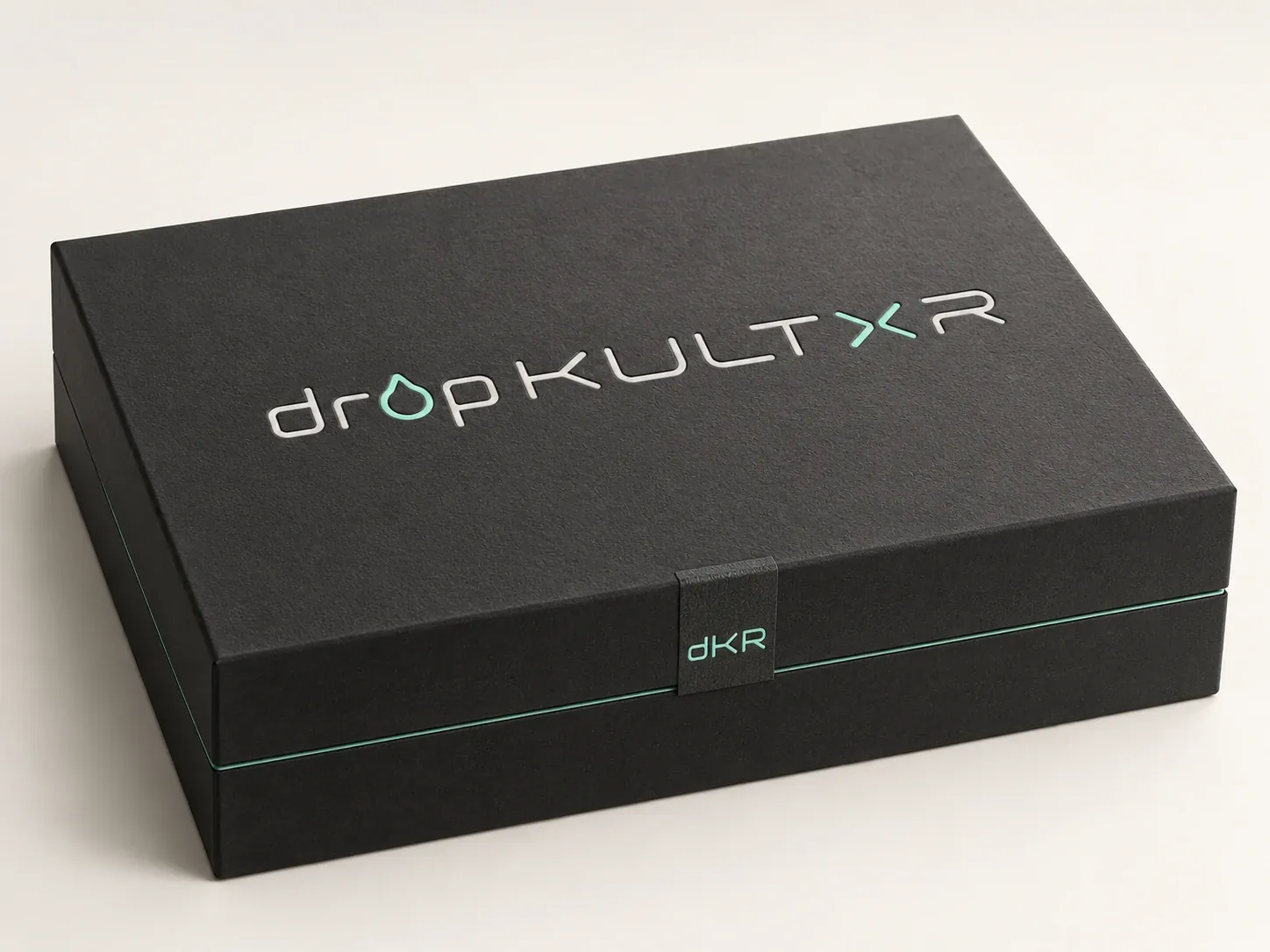
One charcoal box system with a mint reveal and a coordinated interior. Open is the frame that matters; the lid is here because the outside still has to survive a courier and look like it was meant.
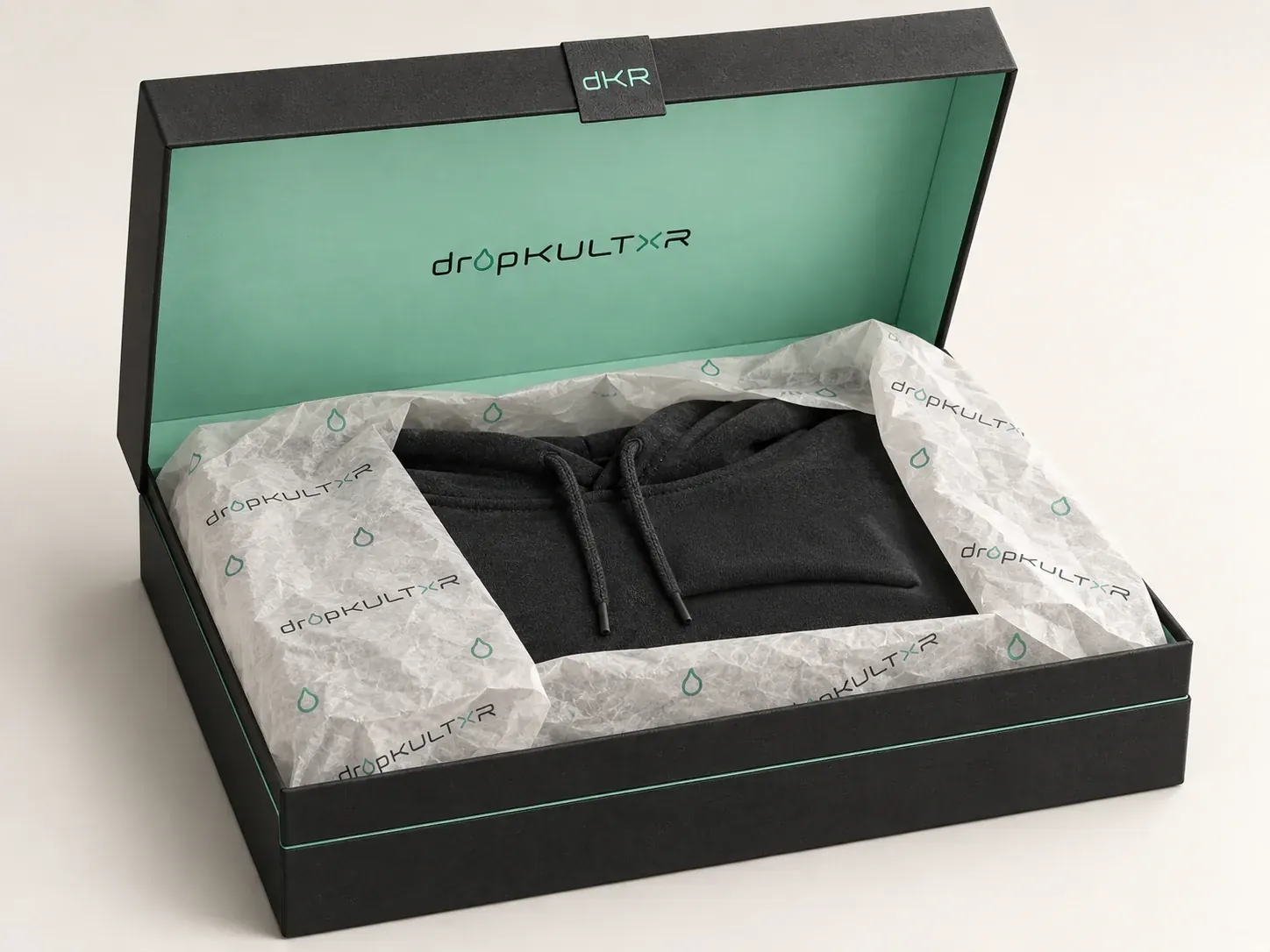
The three layers inside it
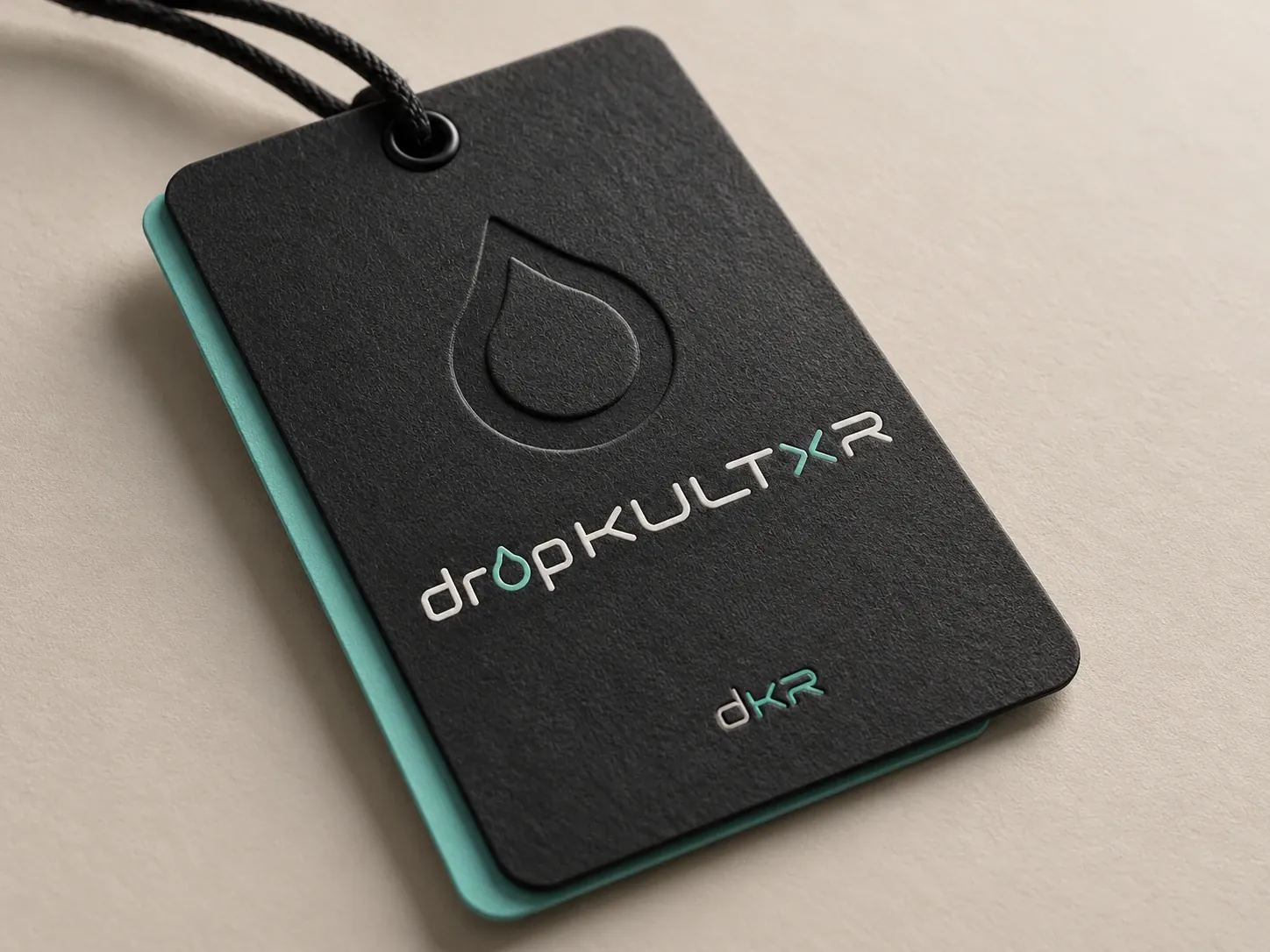
Layered hangtag
Textured charcoal card on a mint backing layer, with a debossed teardrop, a metal eyelet and a black cord.
- What it decides
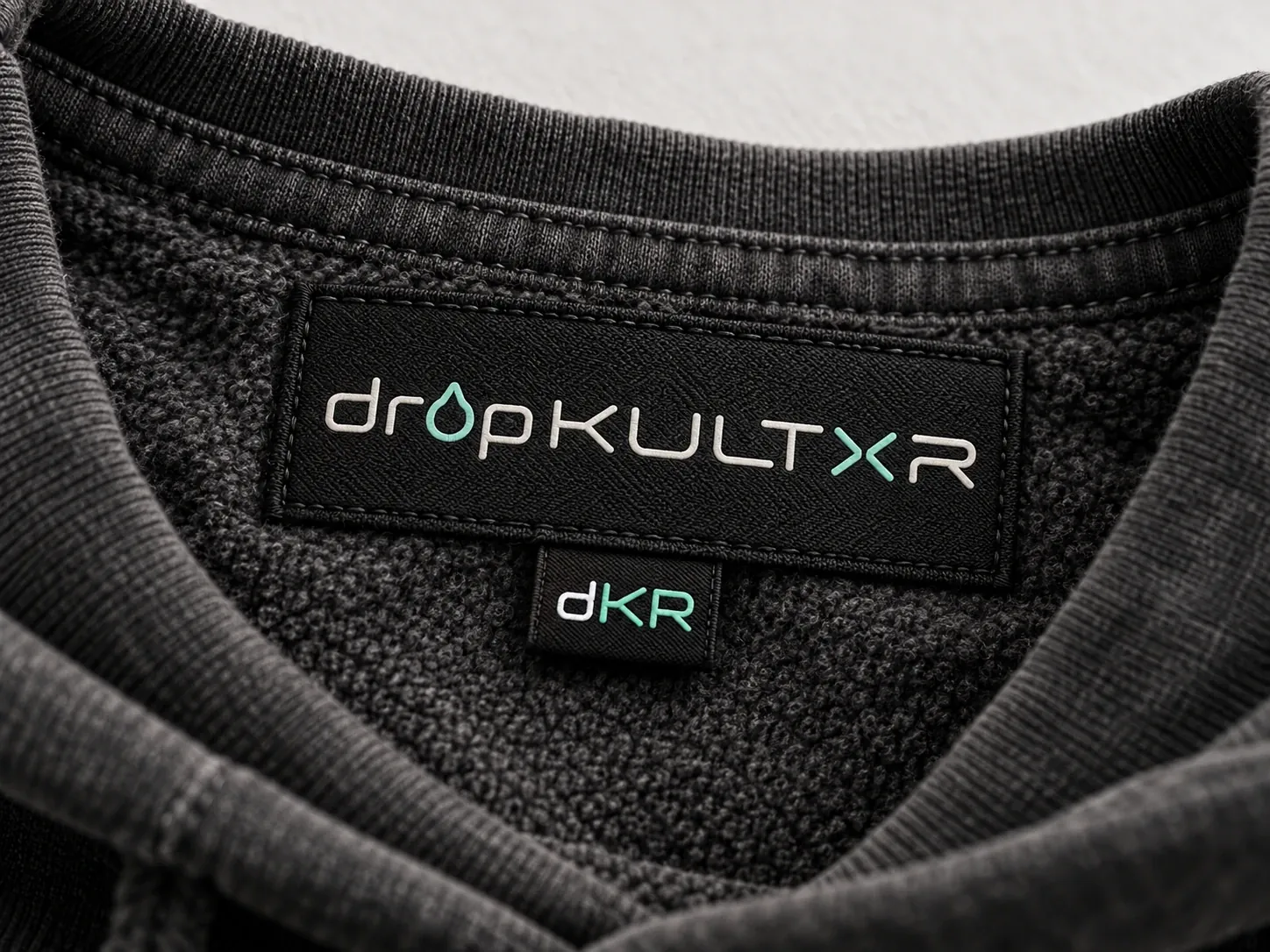
- The tag is where a product stops reading as blank stock. It also carries the things a garment is legally required to say, so it is rarely optional — the choice is whether it is printed or considered.
- Lead time
- Print run. No tooling unless the shape is custom.
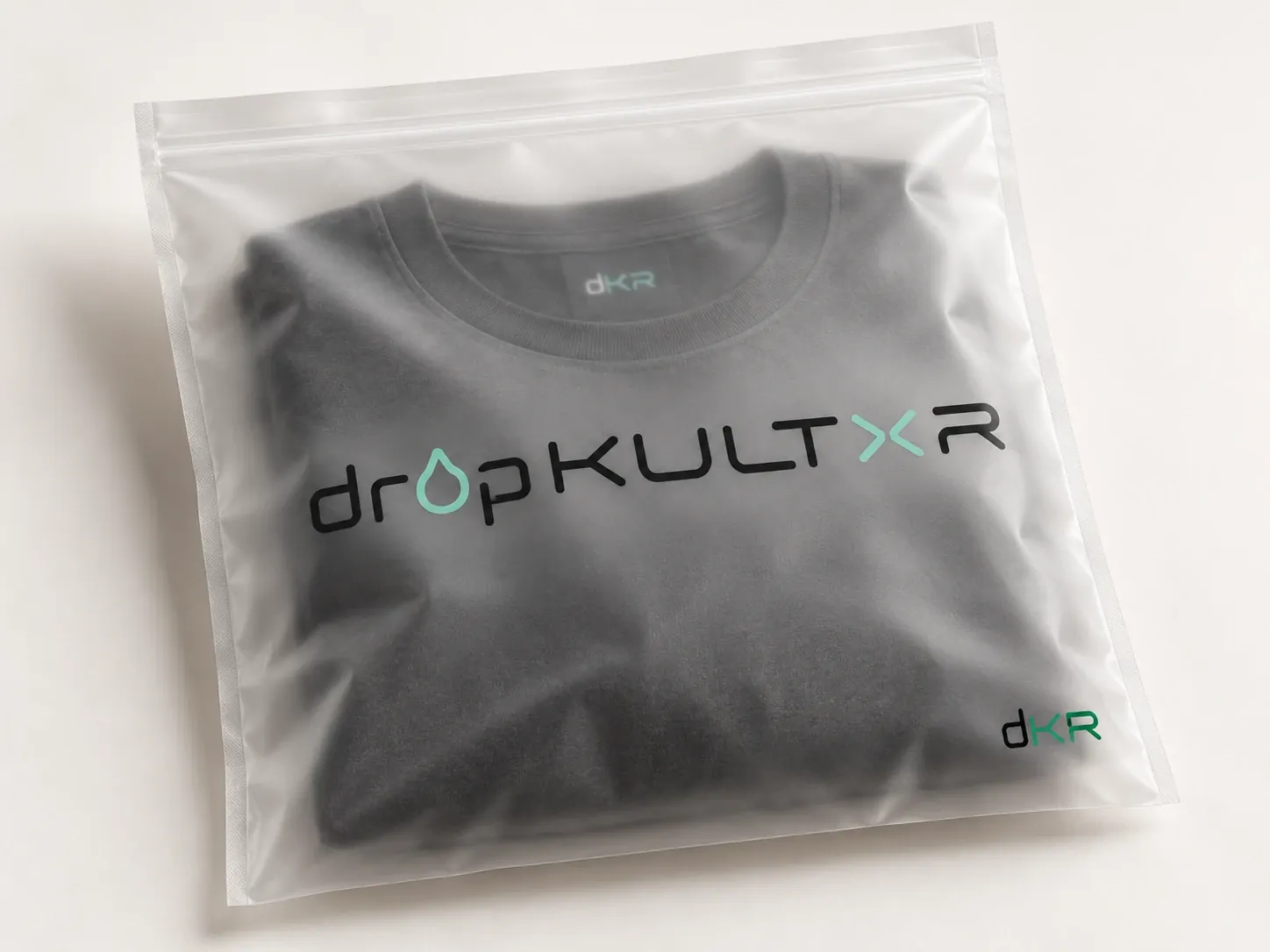
Frosted garment bag
A resealable frosted sleeve printed with the wordmark, with the folded garment legible through it.
- What it decides
- Protection in transit and on a shelf, and it is the cheapest way to make a plain mailer arrive looking finished. It is also the layer most likely to be a recycling claim, so know which property you are claiming before it is printed.
- Lead time
- Print run. Stock sizes ship fastest.
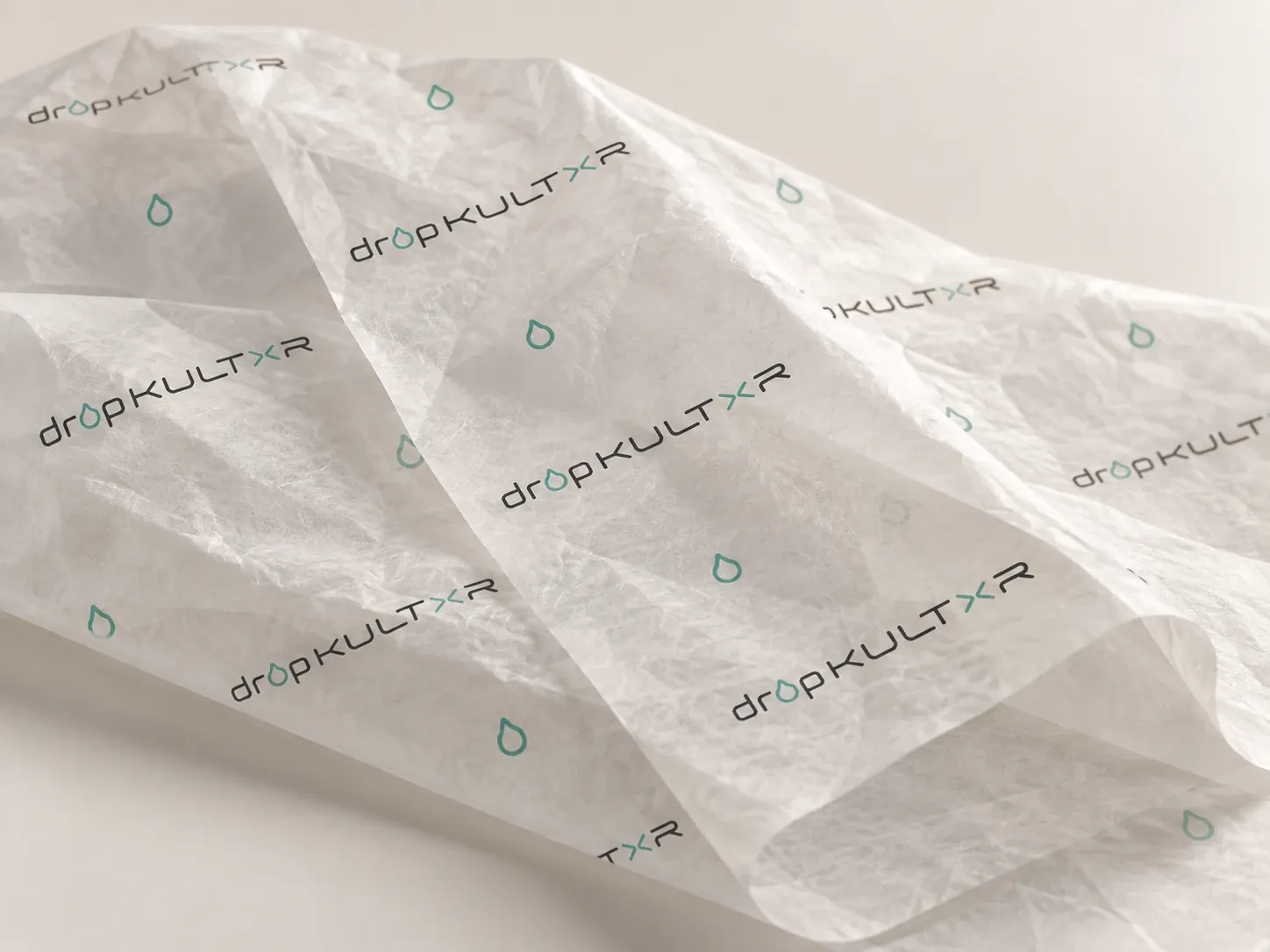
Branded tissue
Bone tissue printed with widely spaced wordmarks and mint teardrops.
- What it decides
- Per pound this moves the unboxing more than anything except getting the box size right. Most of the perceived difference between plain and premium is the small printed things inside, not the box around them.
- Lead time
- Print run. Changeable between drops.
Concept renders from the dropKULTXR art direction, not photographs of a produced run. Structural packaging is quoted per programme against real dimensions, and any recycling or compostability claim is matched to evidence before it is printed.
Levels
Four ways to do this, and three of them are cheap.
Roughly in order of return per pound spent. Most programmes should stop at the third.
The right size
Carrier pricing works in bands by dimension and weight, and dimensional weight means a large light parcel is charged as though it were heavy. A box a centimetre over a threshold costs more on every order, forever.
Costs nothing extra. The single most consequential packaging decision, and the one most often made by eye.
Printed insert or card
A branded card and a well-placed sticker on a plain mailer reads far better than the cost gap suggests, and it can be changed between drops without touching anything else.
Cheapest real upgrade. No tooling.
Custom-printed stock sizes
Take a standard box or mailer, so no die and no tooling, and print on it. Lead time is a print run rather than a manufacturing project.
Usually the best value. The middle ground most programmes should land on.
Fully custom structure
Bespoke dimensions, structural design and special finishes — the box above. It produces something nobody else has, and it is the longest and most expensive option.
Earns its cost on premium and collectible drops. Dead weight on volume merchandise.
Why it lands on the critical path, and how to keep it off
Custom packaging is separately manufactured, frequently with its own tooling — a cutting die for a box, plates for a printed carton. That tooling has a lead time of its own, and it is not shortened by paying more.
The delay is caused by sequencing rather than by manufacturing. Packaging gets specified after the product, because it wraps a thing that has to exist first. So it starts later, it has a longer lead time than the garment, and then everything waits for it.
The fix is entirely a matter of ordering the decisions differently. Packaging can be specified in parallel with the product rather than after it: dimensions are knowable from the product category well before the artwork is final. Deciding on a folded tee in a 240x180 mailer does not require the tee to exist.
Recycled content, recyclability and compostability are three different properties, and packaging is the most visible place a brand makes an environmental claim. A mailer can be made of recycled material and not be recyclable; paper laminated to plastic is generally not recyclable at all despite looking like paper. If a claim is printed, we hold the evidence for it.
Before you specify it
The longer read on each of these, including the checklist we work through on a programme.
Packaging and unboxing
Packaging is specified last and frequently becomes the thing everything else waits for. It is also the first physical contact anyone has with the brand.
Labelling and compliance
Labelling is not branding. It is a legal requirement that differs by market, and the obligation usually sits with whoever sells the garment — which is you.
Where the time goes
Production time is mostly waiting for decisions, not waiting for machines. Knowing which stages are fixed and which are yours changes what you can promise.
Bring us the drop, not just the garment.
Quantity, timing, where it ships and what it should feel like to open. We come back with a packaging spec that fits the shipping bands rather than one that fights them.