Hoodies
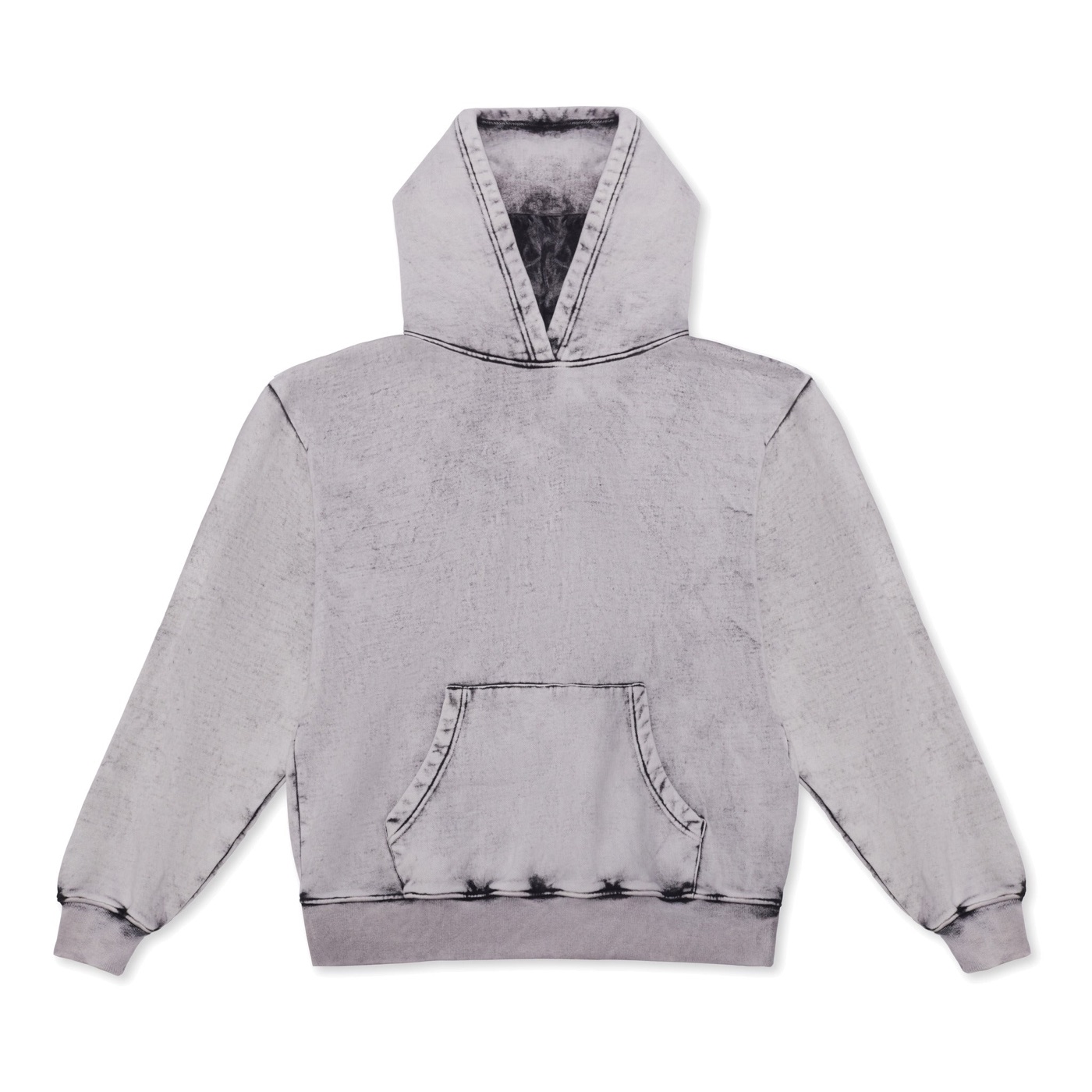
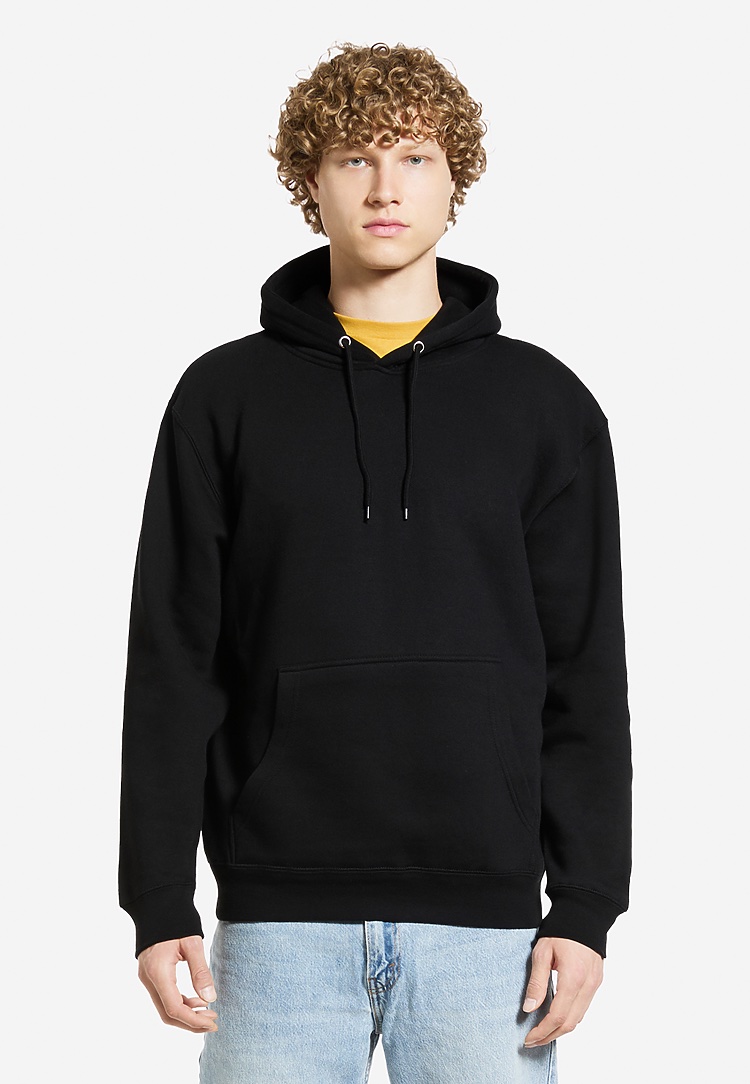
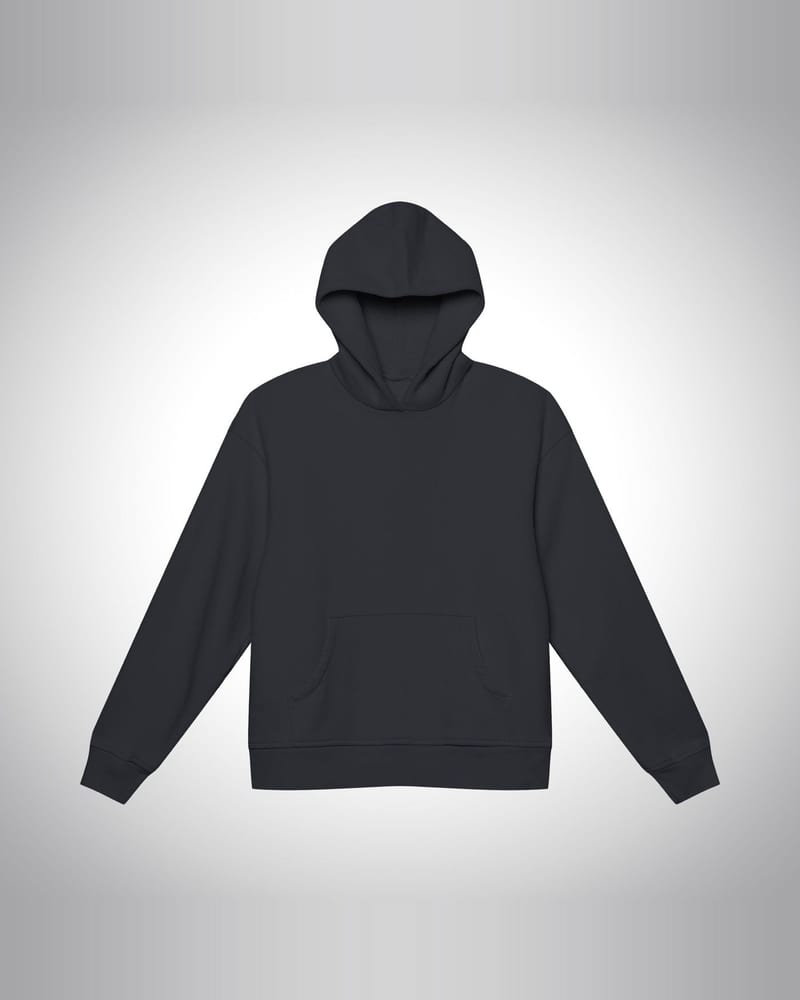
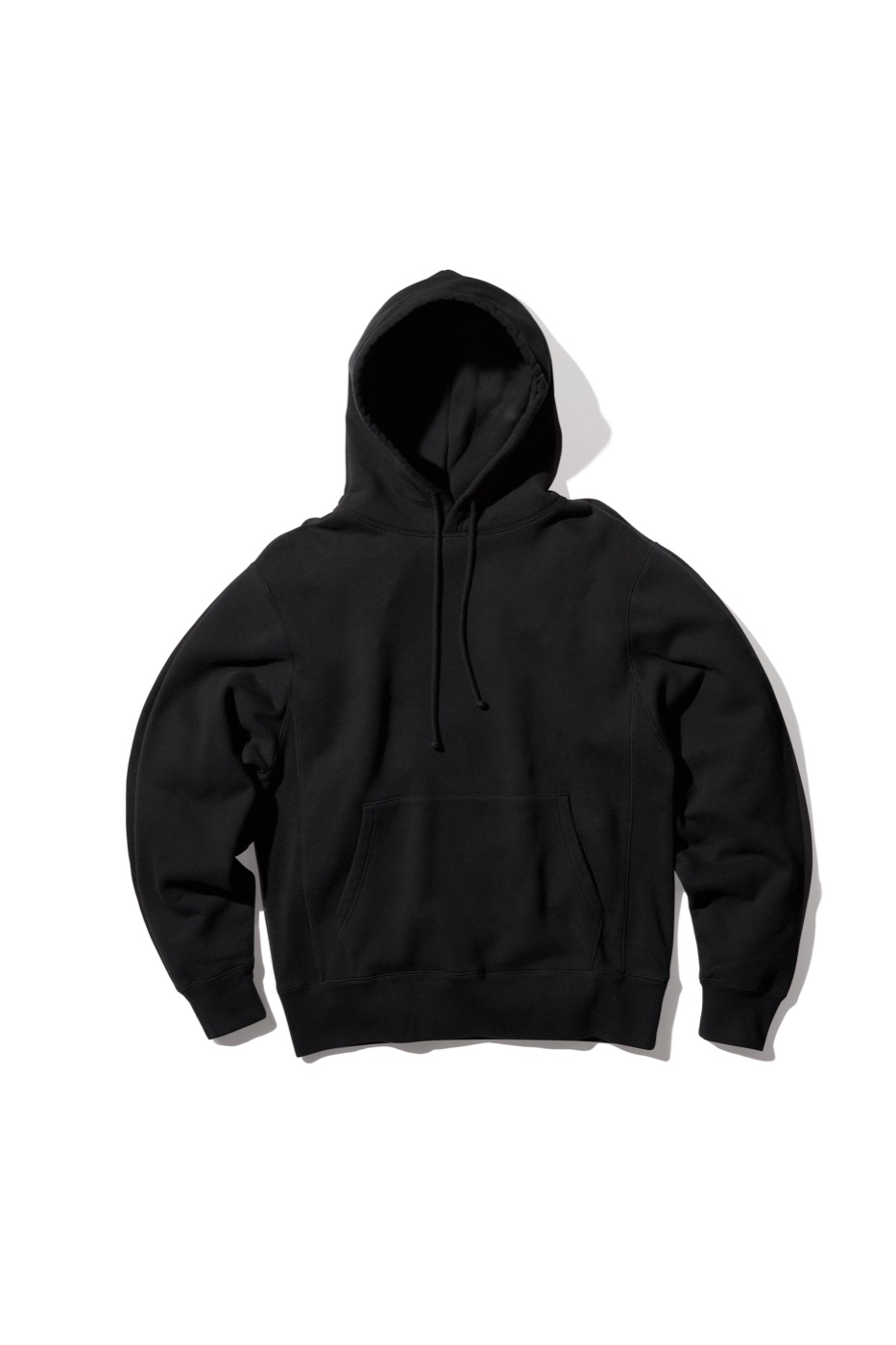
Heavyweight hoodie
A substantial washed-charcoal pullover for an idea with staying power.
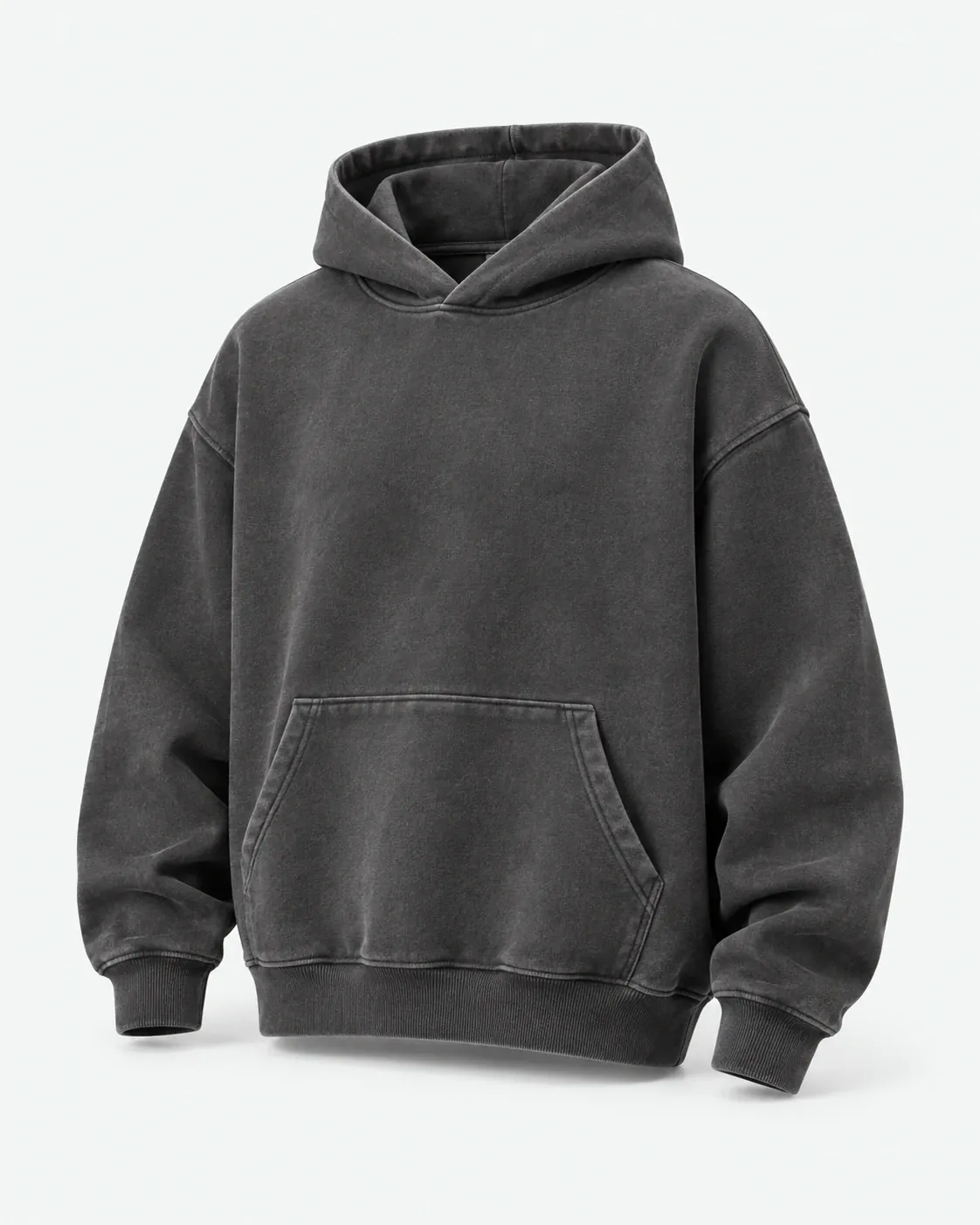 Concept garment
Good product decisions start with clear details.
Fabric and fit
- Fit
- Oversized
- Fabric
- Confirmed per quote
- Weight
- Confirmed per quote
- Sizes
- S to 3XL
Decoration and placement
- Methods
- DTG, DTF, Embroidery, Screen print
- Placement zones
- From the production template
A generous hood, dropped shoulders and a kangaroo pocket, cut to hold a large back print or a small chest mark.
Concept garment: the photographs illustrate the visual system. Composition, weight, measurements and pricing come from the approved SKU before it is offered.
Approve a physical sample before a custom production run.
Committed quantity
Bigger runs, better unit pricing.
The same heavyweight hoodie costs different money at ten pieces and at a thousand, and it does not fall smoothly — it falls in steps, at these quantities, and each step also changes how the order is placed.
1–99 units
Standard price
Straight to checkout where the product is listed with a price. A custom configuration is quoted.
Below a hundred, setup is still a large share of every unit, which is the whole of why the price is what it is.
100–499 units
5% savings target
Volume pricing and checkout, for a configuration the approved cost matrix already covers. Anything it does not cover is quoted rather than guessed.
This is the step that buys you the most: setup has largely amortised and the blank starts hitting supplier price breaks.
500–999 units
10% savings target
Request a bulk quote. Cost, scope, availability and production terms are reviewed before a price is issued.
A run this size books capacity and commits material, so somebody checks it can be made on the dates you need before quoting it.
1,000 units and up
15% savings target
Custom production quote for your exact quantity and production requirements.
Priced for the run you are actually placing. Beyond here the unit price keeps falling slowly while the cash and the inventory risk do not.
A target is not a coupon
A savings target is measured against your own standard price for the same specification, and it is conditional on the cost actually falling at that quantity. Where the verified saving is smaller than the target, you are quoted the smaller one — the target is never applied again as a discount on top.
What counts towards the quantity
- A quantity counts when it can be made in one run: the same garment and supplier route, the same decoration method and specification, the same production window, and the same packing and delivery.
- Sizes mix freely — 60 medium and 40 large of one shirt is a hundred, and each size keeps its own cost. Colours and multiple artwork versions mix only when the approved costs cover the extra preparation and handling.
- 60 shirts and 40 unrelated hoodies is a sixty and a forty. They are two runs, and neither reaches the first band.
Which price you are being quoted
Everything here is quoted on the retail path. Approved creator-resellers and brand-resellers are quoted on a trade path instead — the same garments and the same verified costs, calculated at a different margin. They are alternatives rather than a price and a discount, and there is nothing to type at checkout: a trade price belongs to an approved account, and an account that is pending or unapproved is quoted this one.
Before you ask for a number
What the price is made of, and when it lands.
Heavyweight hoodie is quoted, not listed, because the same garment costs different money at ten pieces and at a thousand. These are the lines a quote separates and what moves each one, so the number you get back is one you can argue with.
Blank
The garment before anything is printed or stitched on it.
- Driven by
- Category, fabric weight and fit — and whether the colour and size curve you want are in stock in the quantity you want.
- With quantity
- Falls in steps at supplier price breaks, not smoothly.
Decoration
The print or the stitch itself, per placement.
- Driven by
- Method and coverage. Screen print is priced per colour, embroidery per stitch, DTG and DTF flat per piece.
- With quantity
- Flat for DTG and DTF. Falls hard for screen print once setup is spread.
Setup
Screens made and aligned, artwork separated, an embroidery design digitised, tooling cut.
- Driven by
- Colour count and placement count. It is the same whether you make ten pieces or ten thousand.
- With quantity
- Fixed per run, so it disappears into the noise as quantity rises. It carries forward to a repeat order.
Labels, trims and branding
Neck labels, woven tags, hangtags, closures — what makes a blank read as your product.
- Driven by
- Whether they are stock or custom. Custom trims have their own minimums and their own tooling.
- With quantity
- Often has a minimum of its own, higher than the garment’s.
Packaging
Polybag, folding, cartons, and any custom box or insert.
- Driven by
- Whether the unboxing is part of the product or the product is simply protected in transit.
- With quantity
- Custom packaging is printed in runs, so it prices like a print job rather than like a garment.
Freight and duty
Getting the finished run from where it is made to where it is needed, and clearing it on arrival.
- Driven by
- Sourcing region, weight, and whether it moves by sea or by air. Duty is set by the destination and the commodity, not by us.
- With quantity
- Per shipment rather than per piece, so a small run carries it badly.
Tax
Quoted separately from the unit price, never folded into it.
- Driven by
- Where the goods are invoiced and delivered. The basis is stated on the quote.
- With quantity
- Applied to the total, so it moves with everything above it.
Every quote states what it assumed
- How many print or stitch placements are included. A second placement is a second decoration line and, for screen print, a second setup.
- The quantity and the size curve it was priced at. Both change the blank price and the per-unit share of setup.
- The date the blank, the freight rate and the duty were sourced. An estimate carries that date; a confirmed quote carries a validity period.
And where the calendar goes.
01
Artwork review
Files checked, separated, digitised for embroidery, positioned and scaled to the real print zone.
Yours. Clean vector artwork moves through in a day; a logo that has to be redrawn does not.
02
Sampling and approval
A physical sample made, sent, looked at and signed off before anything is run.
Yours, and it is the single largest source of lost time. Making the sample is quick; waiting for a decision is not.
03
Production and finishing
The run itself, then trims, labels, packing and inspection against the approved sample.
Ours, and rarely the bottleneck people expect. Curing, dyeing and custom trims have physical dwell time that cannot be bought down.
04
Transit
Freight to the delivery address, and customs clearance on the way.
The least controllable stage. Sea freight is measured in weeks, air in days at several times the cost, and clearance can only be buffered for.
A production lead time is not a delivered-by promise. Plan backwards from the date the product has to be in hand — the lead-time guide shows how, and the minimums guide covers where setup stops swamping the unit price.